The Jones collections are OPEN during renovations at Lynchburg Public Library. Parking and sidewalk access are limited. Visitors may park on both sides of the building and enter via Memorial Avenue.
Dear Folks at Home: Lynchburg and the Great War 1914 - 1918
1. The World Goes to War
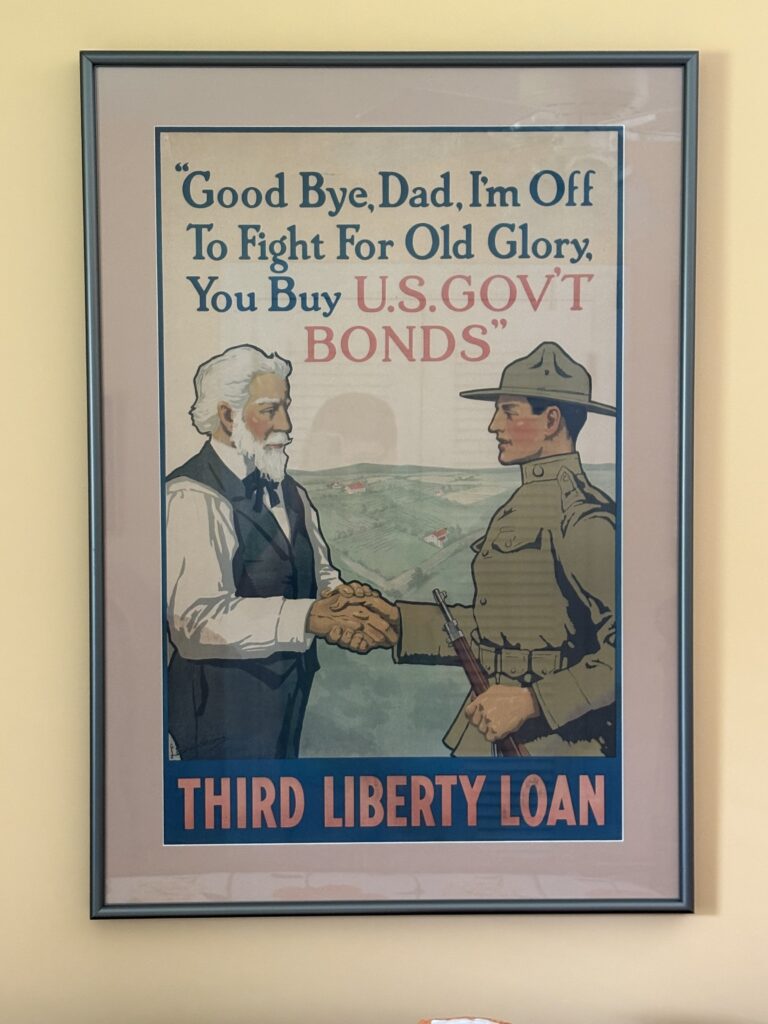
Lawrence Harris. "Goodbye Dad". Poster. 1918. New York: Sackett & Wilhelms Corp. On loan from Gerard & Carolyn Sherayko.
World War I began in Europe in 1914, after the assassination of Archduke Franz Ferdinand of Austria-Hungary set off a chain of alliances. Britain, France, and their allies fought Germany and its partners for more than four years, with invasion and bombing raids close to home.
The United States stayed neutral until April 1917, when German attacks on American ships and a secret telegram urging Mexico to attack the U.S. pushed Congress to declare war. Because Europe fought of years and America for only about nineteen months, propaganda on each side of the Atlantic did very different work. Posters show how rallying support played out on the American and British sides.
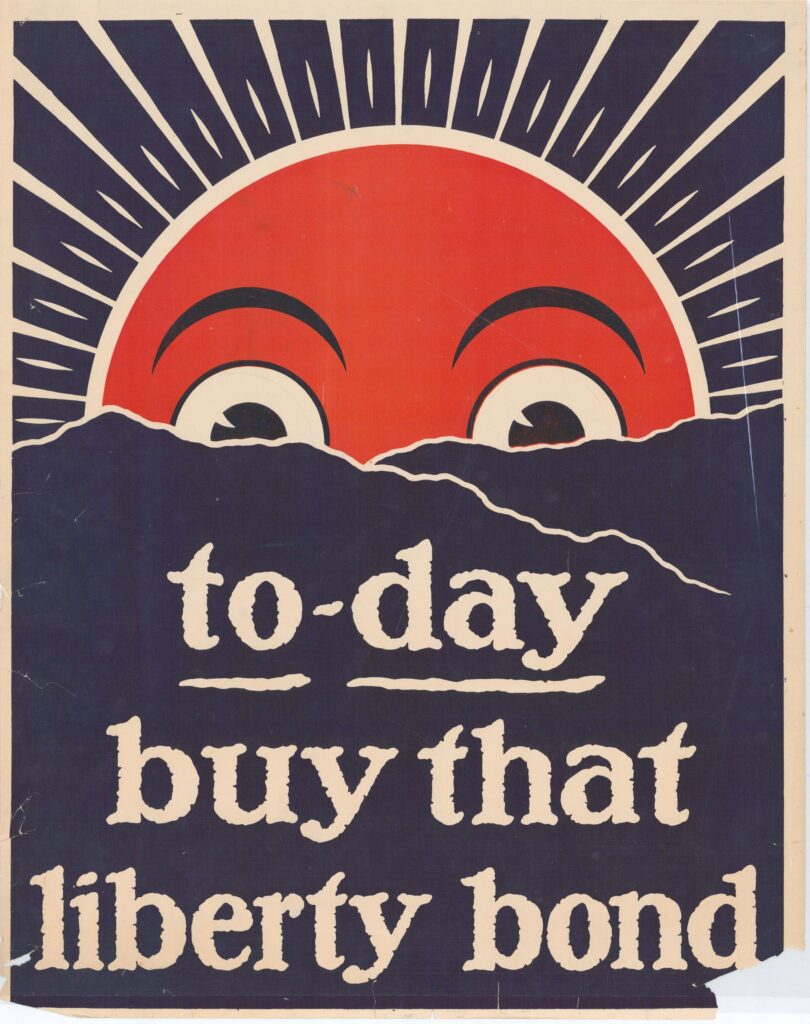
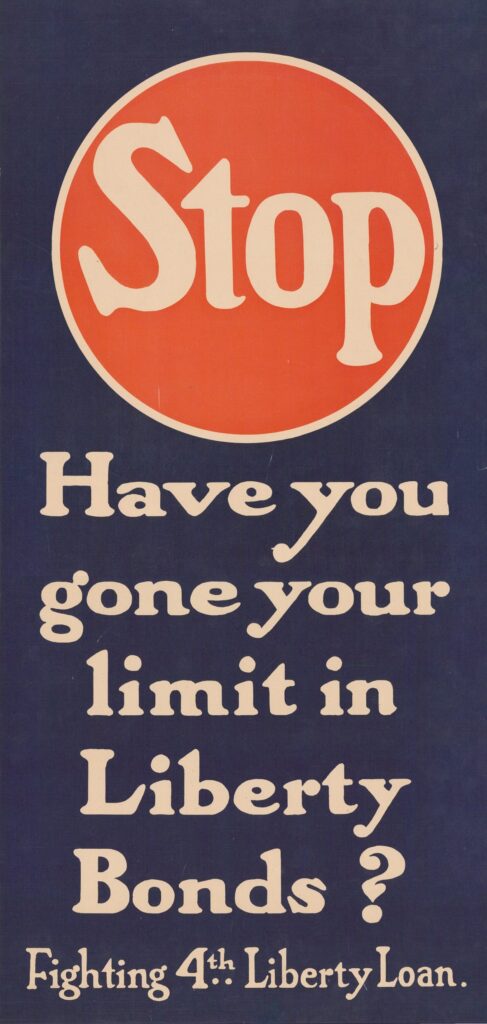
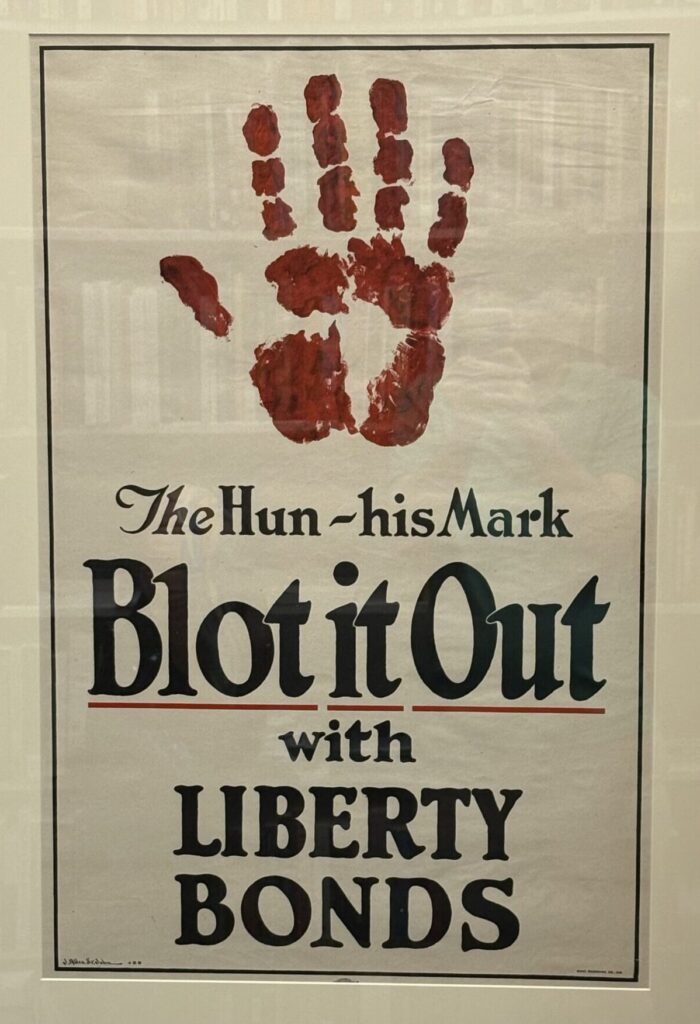
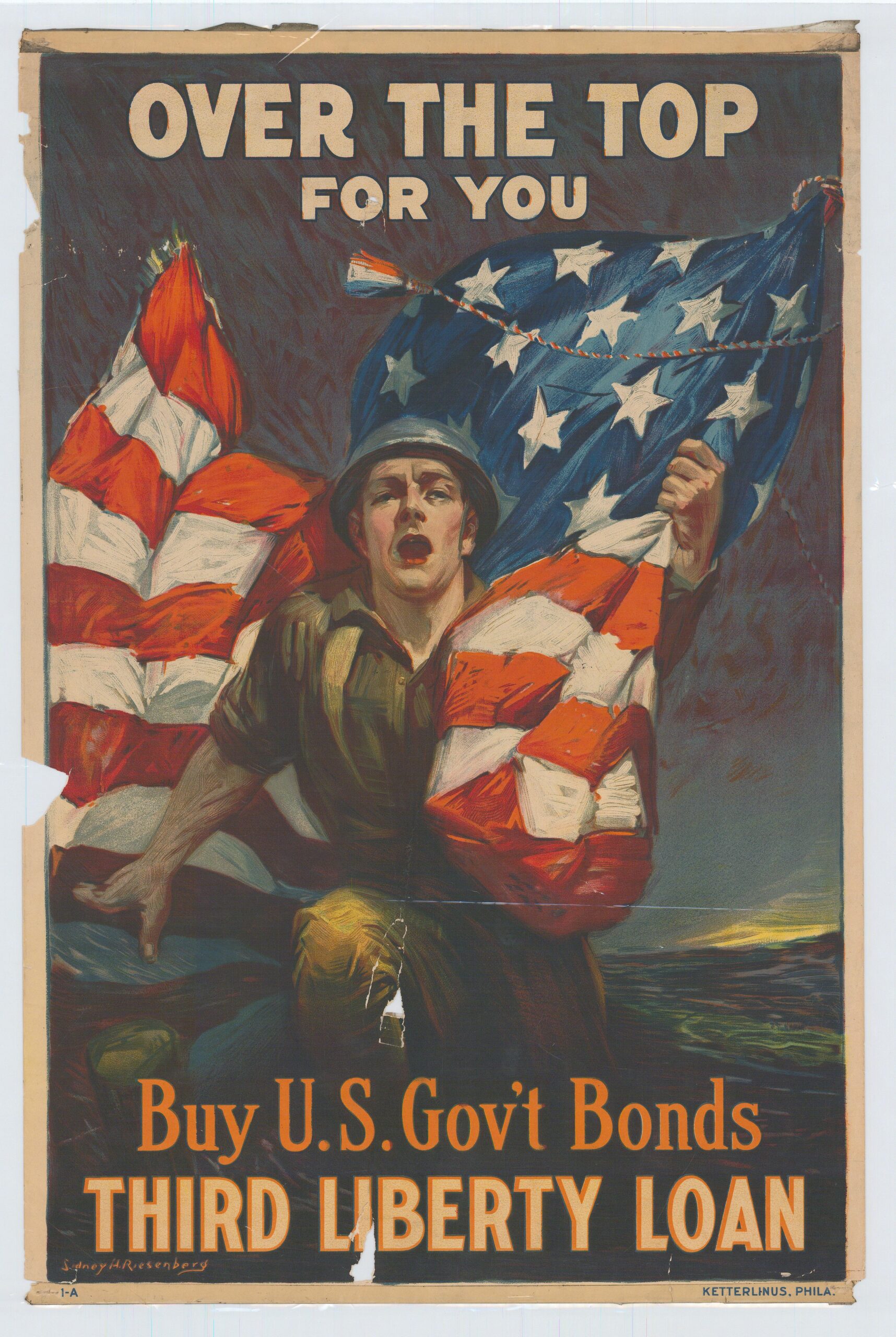
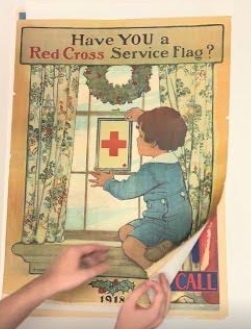
Because most American troops served as a result of the draft under the Selective Service Act, U.S. posters spent little effort on recruitment. Instead, they raised money through Liberty Bonds and supported relief work through the American Red Cross.
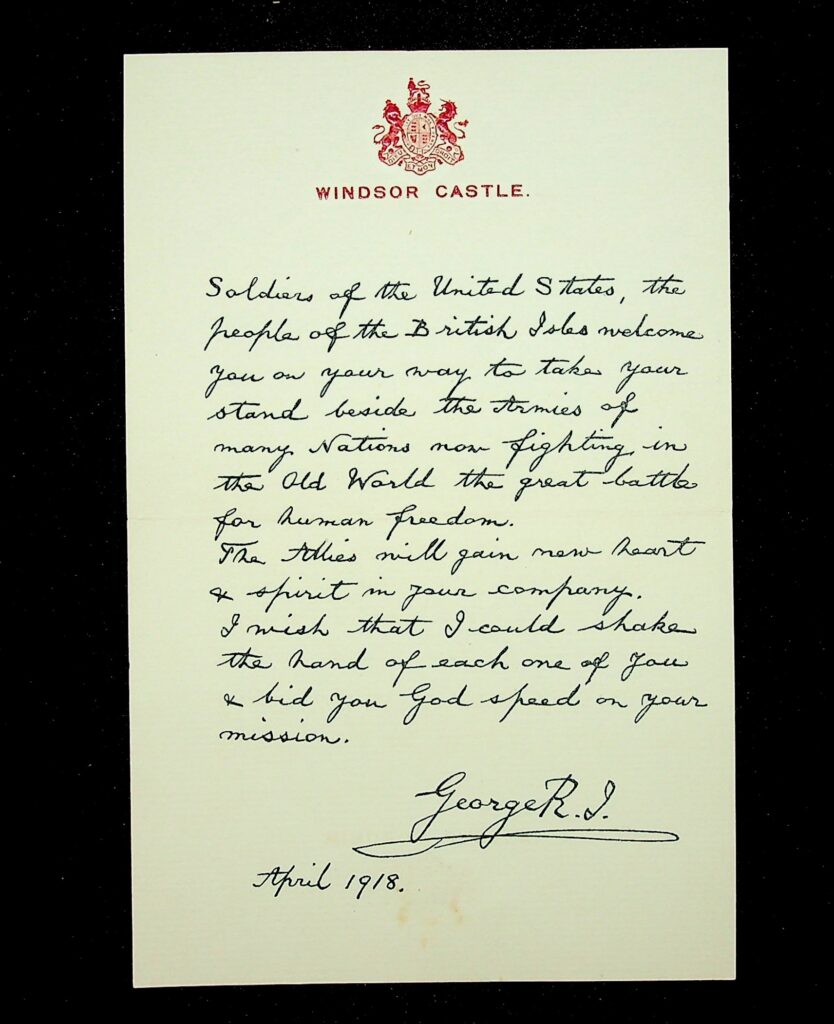
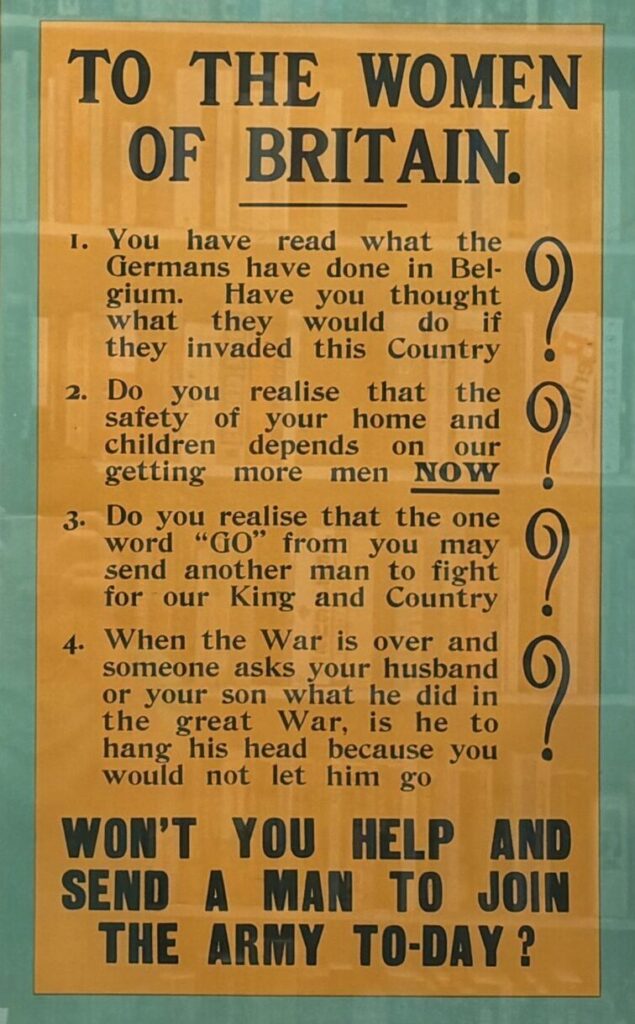
Britain had no draft until 1916, so early posters worked hard to persuade men to volunteer. Once conscription began, the message shifted to keeping morale high during years of hardship. Posters focused on war savings, rationing, and encouraging men who still had not enlisted.
April 1918 Letter from King George V welcoming American troops, The Jones, MS 1041 McBratney Family Papers
Far left and center left: Posters from The Jones collection PSTRWW1; Far right and center right: Posters on loan from Gerard and Carolyn Sherayko
2. Writing Home: The Guy Dirom Letters
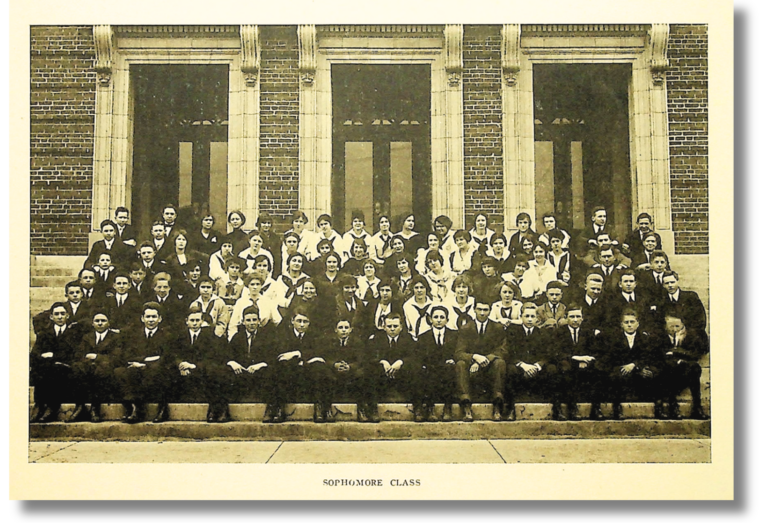
Sophomore Class, Lynchburg High School, 1913–1914. Guy Dirom is among the class members. "The Crest" (Lynchburg, VA: Lynchburg High School, 1914), page 38
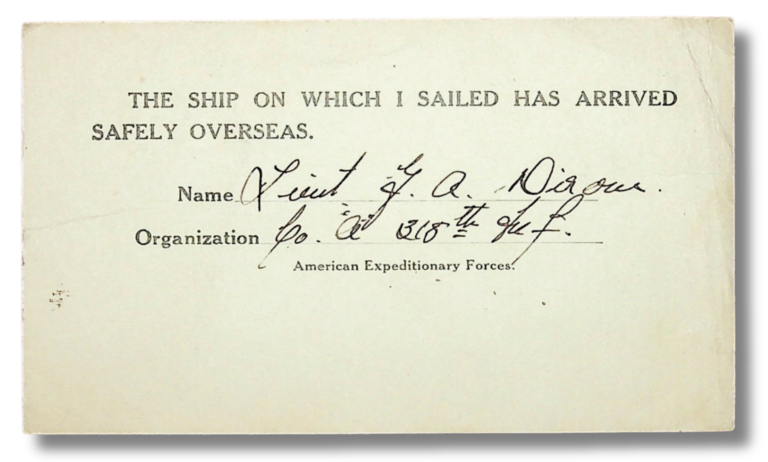
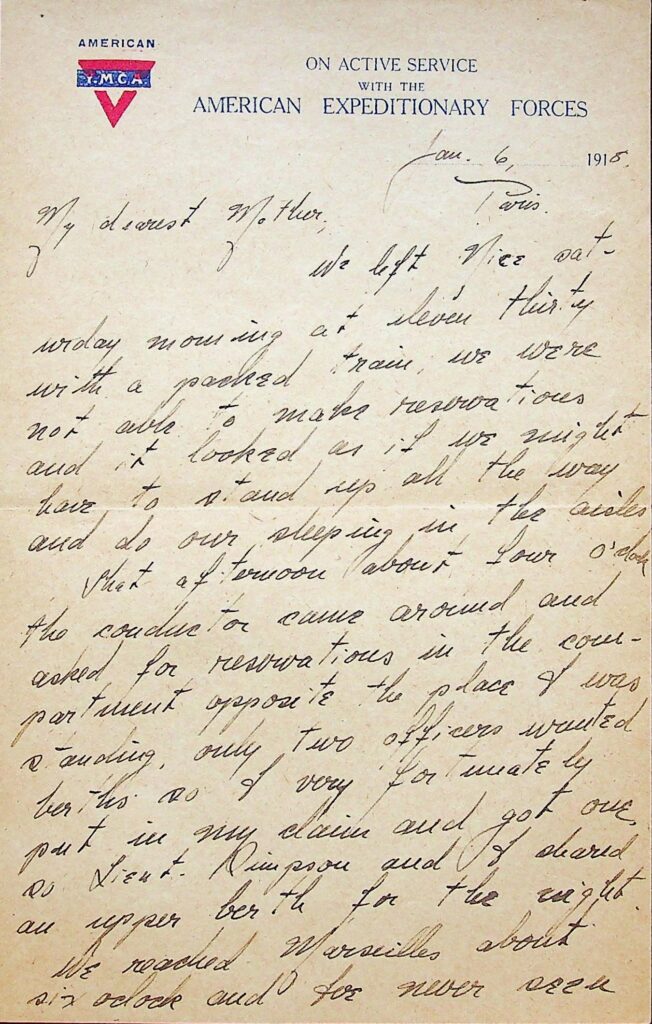
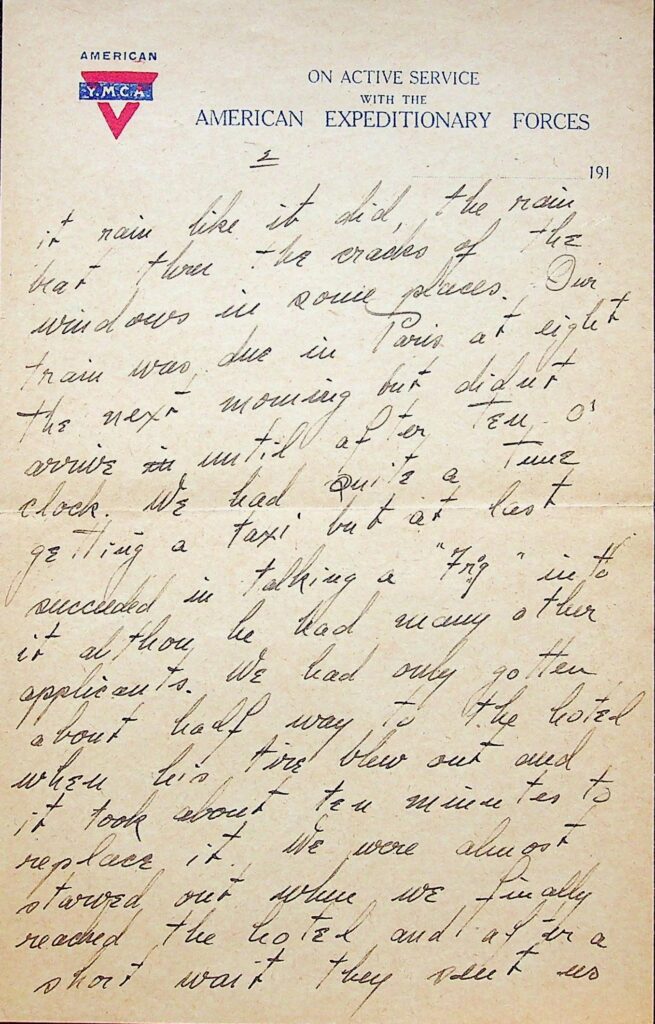
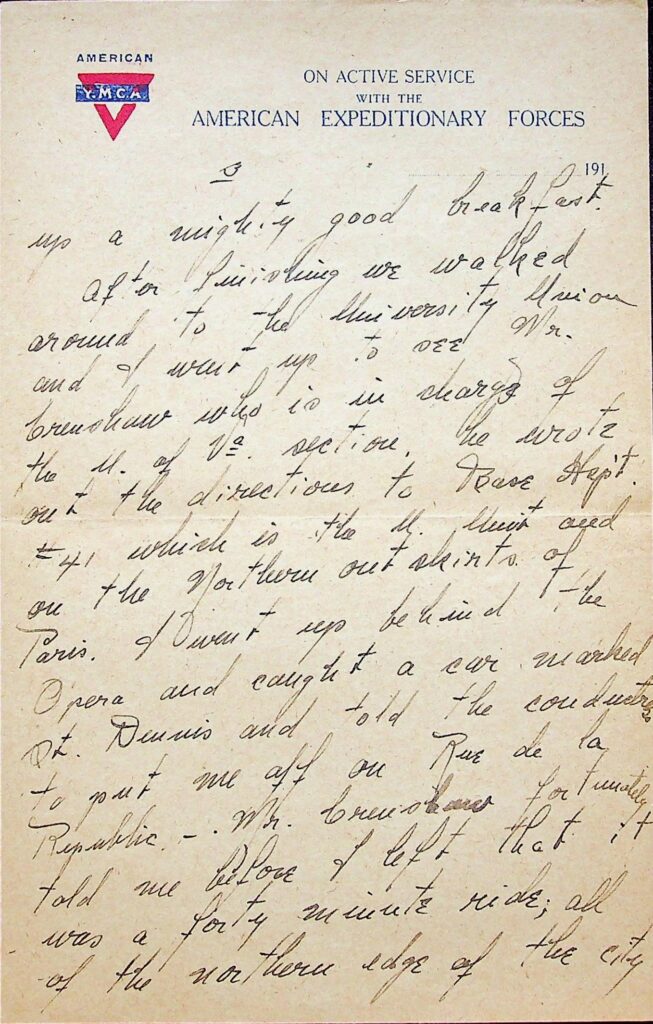
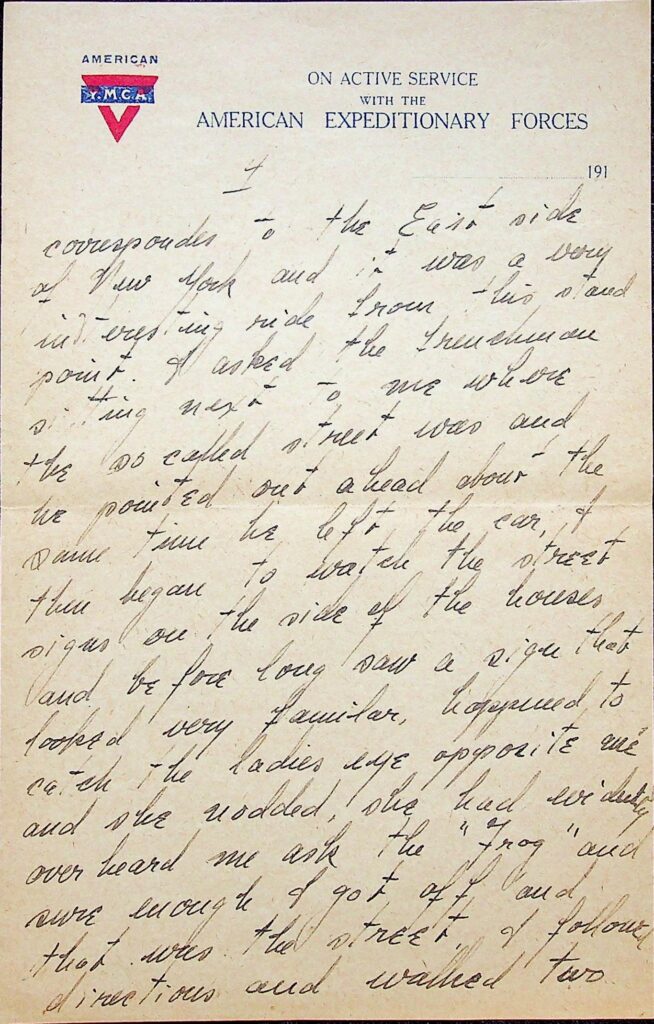
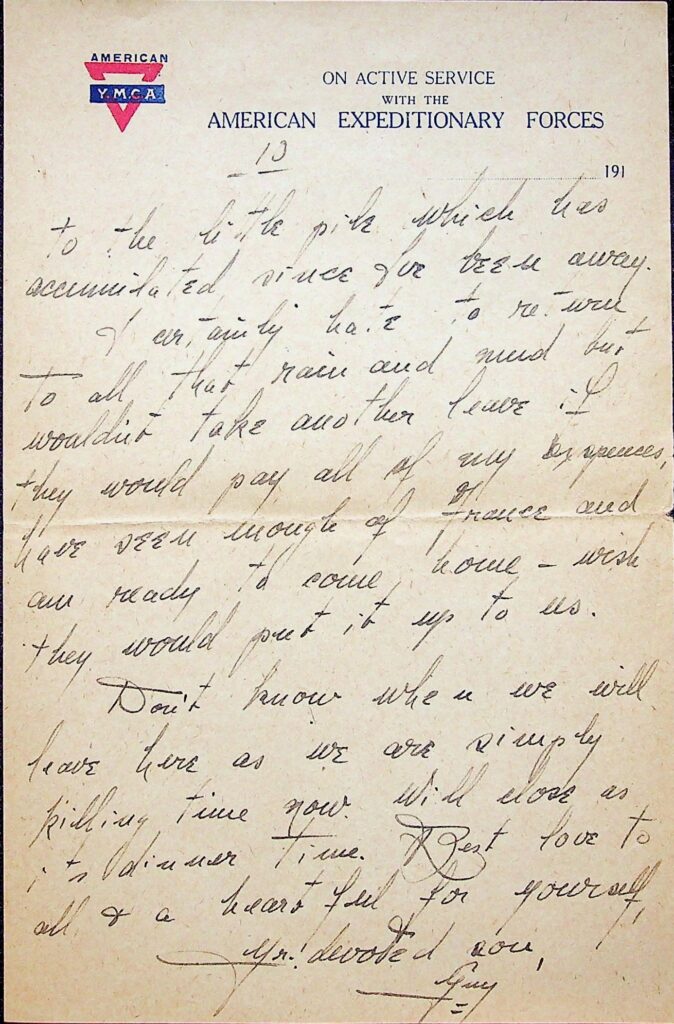
For months at a time, communication with an American soldier overseas could be unpredictable — slowed by the time it took mail to cross the Atlantic. Letters were filtered by military censors who took care to limit information that might help the enemy. Lieutenant Guy Alexander Dirom of Lynchburg, who served with Company B of the 318th Infantry Regiment, American Expeditionary Forces, wrote home to his mother throughout his enlistment and his deployment to France.
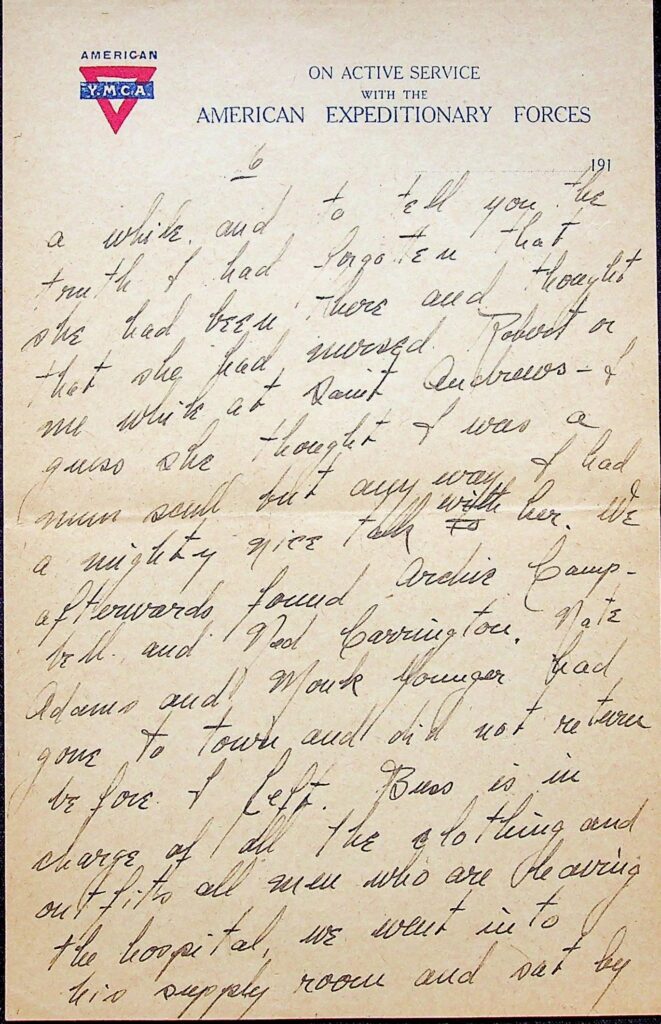
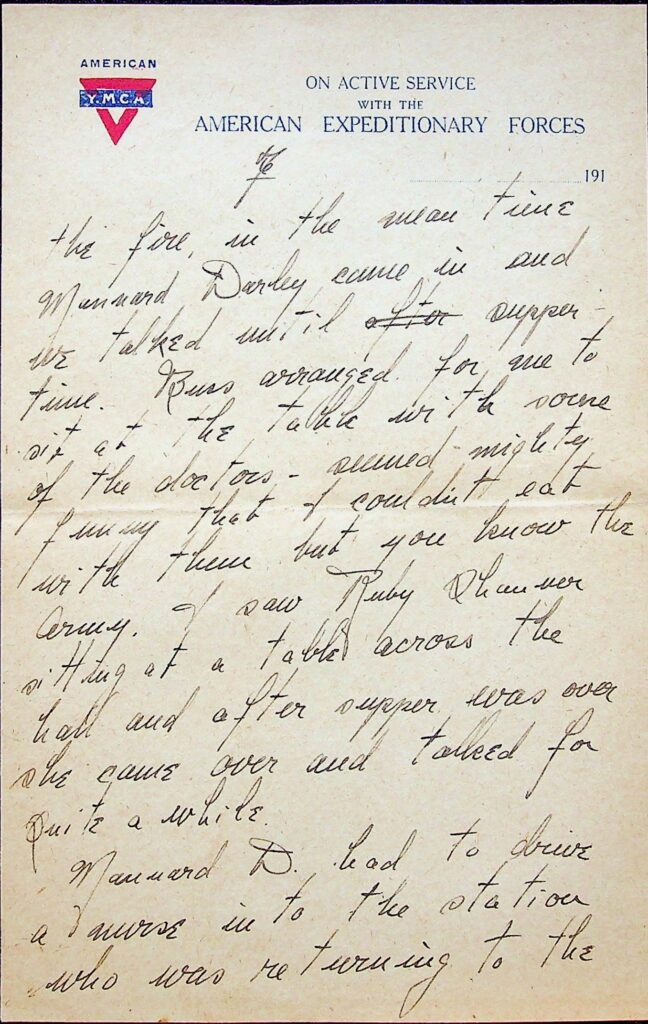
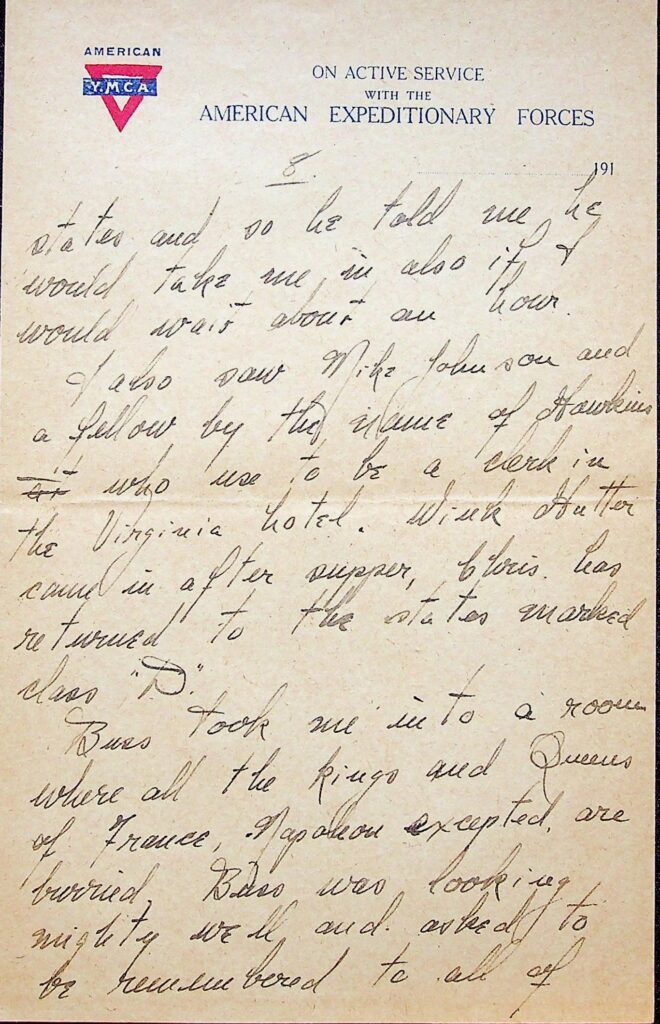
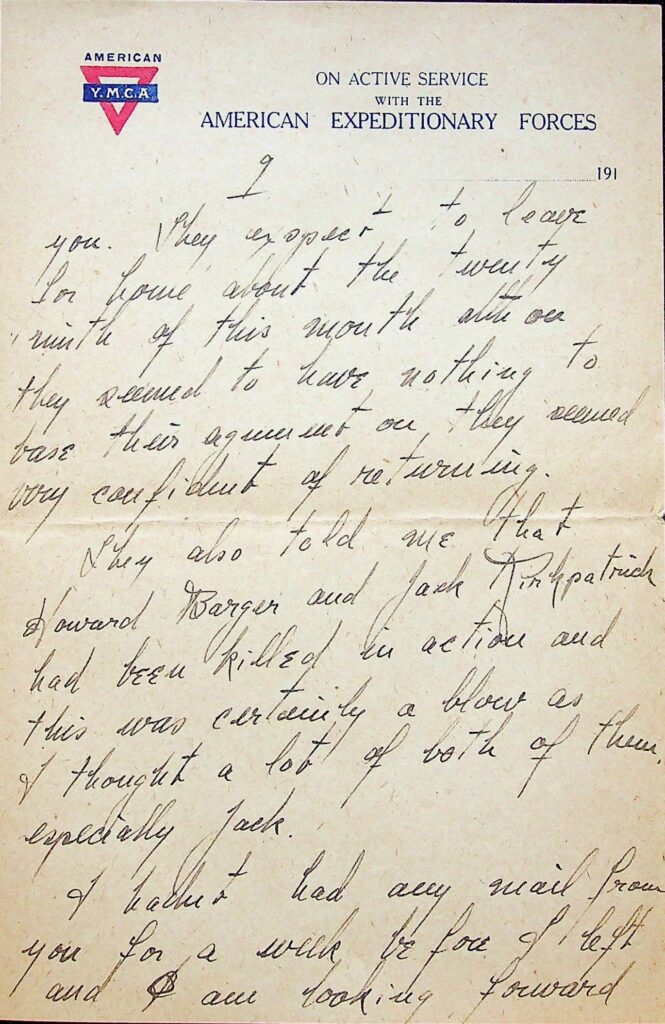
Donated to Jones Memorial Library in 2025, the Guy Alexander Dirom Papers, 1916–1918 (MS1534), offer a rare, personal window into what it meant for one Lynchburg family to send a son to war. In the manuscript collection, you can explore Dirom’s letters chronologically, alongside transcriptions, to follow his path from training, to the trenches of France, and back home again. Below is a ten-page letter from France, written on January 6, 1918 in Paris, during leave from the front.
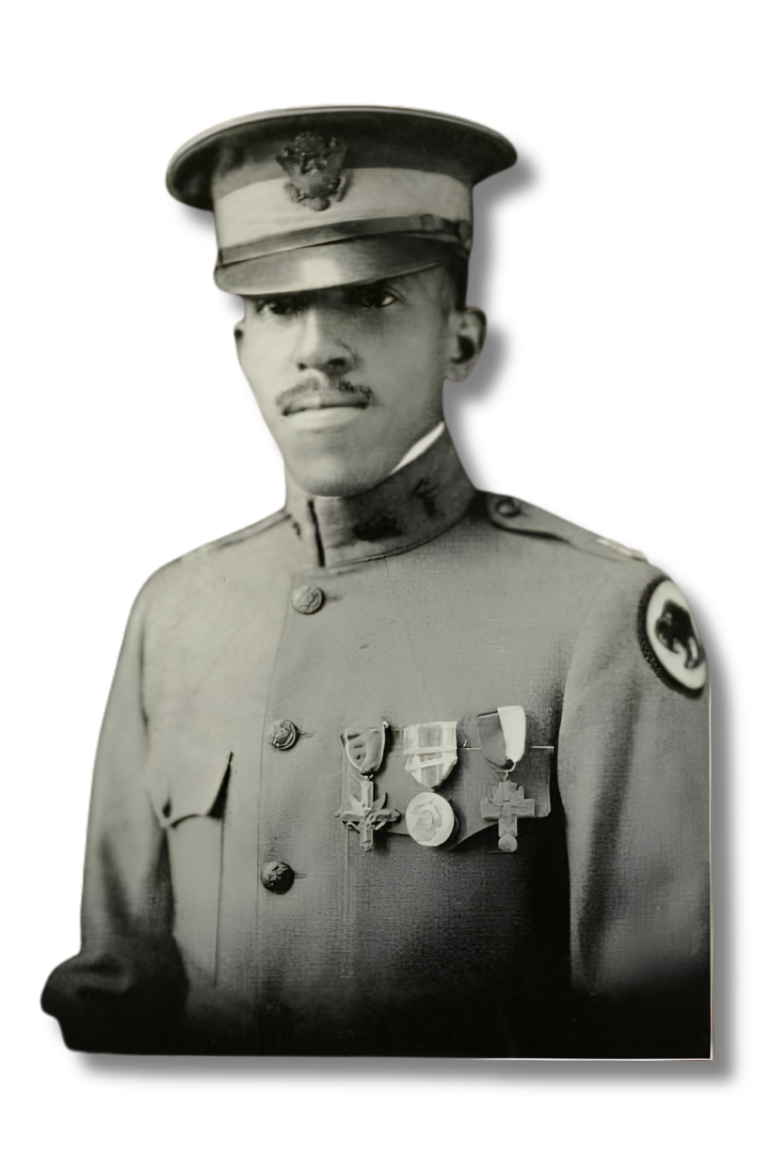
Dr. Thomas Edward Jones, in uniform, c. 1918. Credit: Ancestry.com
Like life in Lynchburg, service in the U.S. Army was racially segregated during WWI. Not every Lynchburg soldier’s story has been widely shared.
Thomas Edward Jones was born in Lynchburg on May 26, 1880 and attended school in the city. He went on to become a physician, a U.S. Army officer, and one of the most highly decorated Virginians of the First World War. Jones graduated from Howard University and later earned his medical degree from Howard in 1912. Jones interned and worked as an anesthetist at Freedmen’s Hospital in Washington, D.C.As early as 1914 he was serving as a lieutenant in the District of Columbia National Guard.
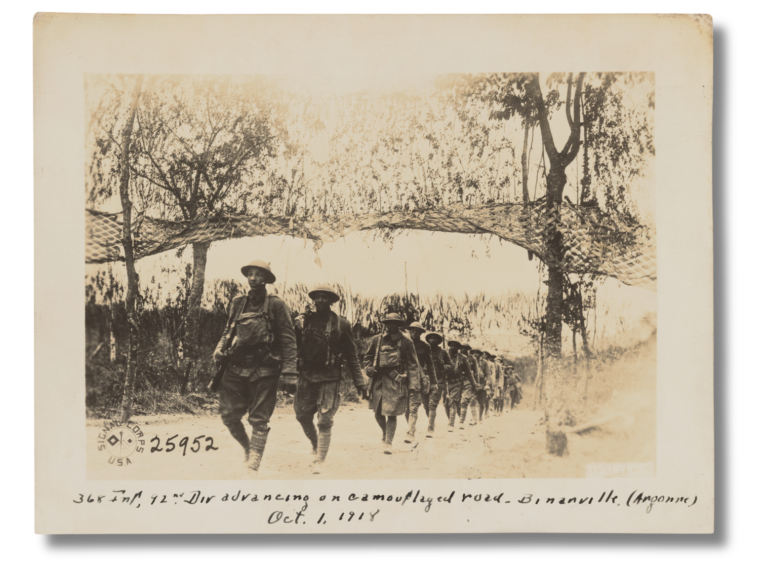
During the Meuse-Argonne Offensive in the fall of 1918, Jones moved into open ground under direct machine-gun fire near Binarville, France, to reach and treat a wounded soldier. For this act, he earned both the U.S. Distinguished Service Cross and the French Croix de Guerre — two of the highest honors either nation could bestow. He returned to Freedmen’s Hospital after the war, eventually rising to become surgeon-in-chief, a post he held until his retirement in 1942. Dr. Jones died in 1958 and is buried at Arlington National Cemetery.
Dr. Jones’s story raises a larger question this exhibit hopes to help answer: how many other African American Lynchburg residents served during the war, and what happened to their stories? The Virginia War History Commission’s WWI veteran questionnaires, held at the Library of Virginia, include a dedicated Lynchburg City series that may hold more names. If your family’s history connects to this chapter of Lynchburg’s past, we would like to hear from you.
"Dr. T. E. Jones, 77, Dies, Ex-Freedmen's Head," The Evening Star (Washington, D.C.), April 6, 1958
368th Infantry, 92nd Division marching near Binarville, in the Argonne — October 1, 1918. Photograph by United States Army Signal Corps, Smithsonian National Museum of African American History and Culture
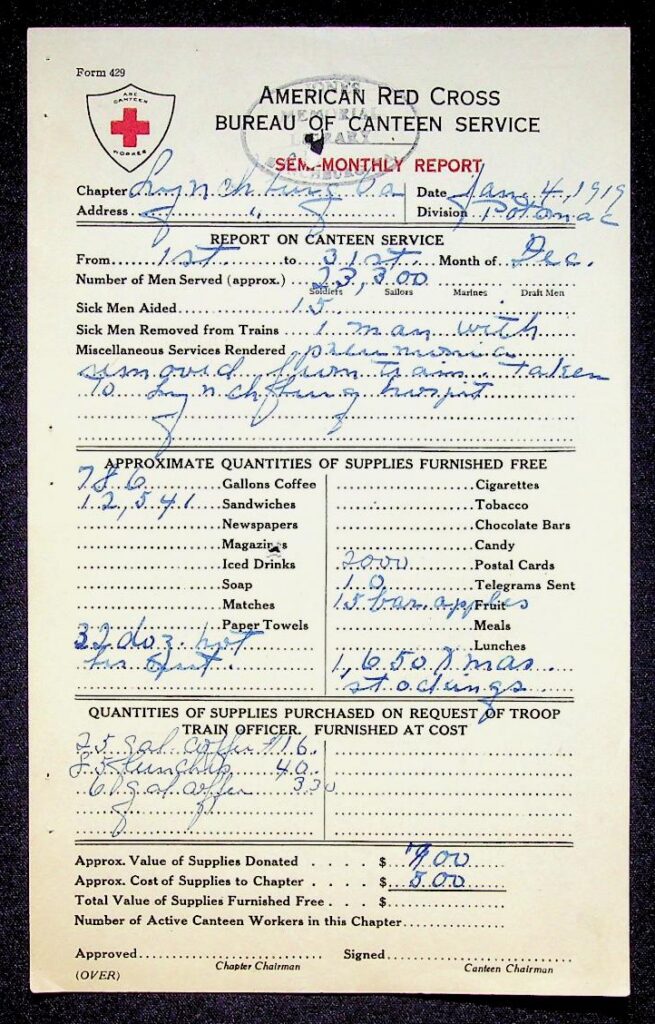
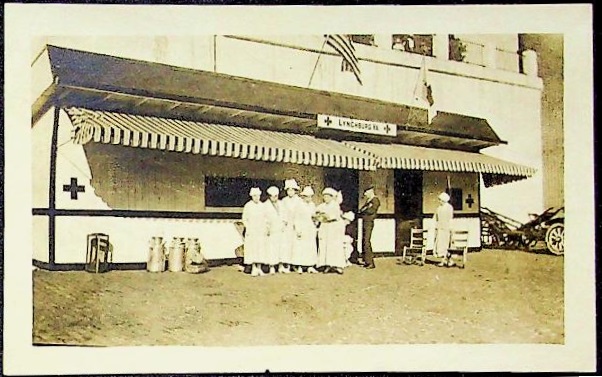
When Lynchburg’s troops left for the European theatre during World War I, the city’s residents stepped in to keep things running. Many were working in hospitals, offices, and industry. Lynchburg’s rail station became a stop where soldiers disembarked on their way to and from the battlefront. Local residents and American Red Cross volunteers met arriving troops with food and blankets. Canteen service at Kemper Street Station officially began on September 25, 1917, when a group of local women first prepared lunches for soldiers bound for Camp McClellan, Alabama. The effort grew large enough that the U.S. Army recognized Lynchburg as an official canteen station — and soldiers passing through gave the city its enduring wartime nickname, “Lunchburg.”
Red Cross Canteen Committee ("Tuesday"), Kemper Street Station. Members of the Tuesday canteen committee pose in their Red Cross uniforms, each woman later identified by name in ink below her image — a common practice for preserving group memory in wartime photographs. American Red Cross Canteen Papers Collection, MS1103, Jones Memorial Library
Red Cross Canteen Service Report, January 4, 1919 Kemper Street Station. The Jones, MS 1103 Lynchburg Chapter American Red Cross Canteen Papers
Among the most active organizers of Lynchburg’s canteen effort was Lucile McWane (later Lucile McWane Watson), a Lynchburg native who threw herself into Red Cross work as soon as the U.S. entered the war. In June 1918, McWane was named commandant of the Kemper Street canteen, overseeing volunteers who met troop trains with sandwiches, fruit, and hot coffee for soldiers headed to and from the ports of embarkation. When the 1918–1919 influenza pandemic reached Lynchburg, the local Red Cross — McWane among them — turned its energy to caring for the sick as well.
Red Cross Canteen, Kemper Street Station, Lynchburg, Va. Volunteer workers poses outside of the canteen booth. The Jones, MS1103 American Red Cross Canteen Papers
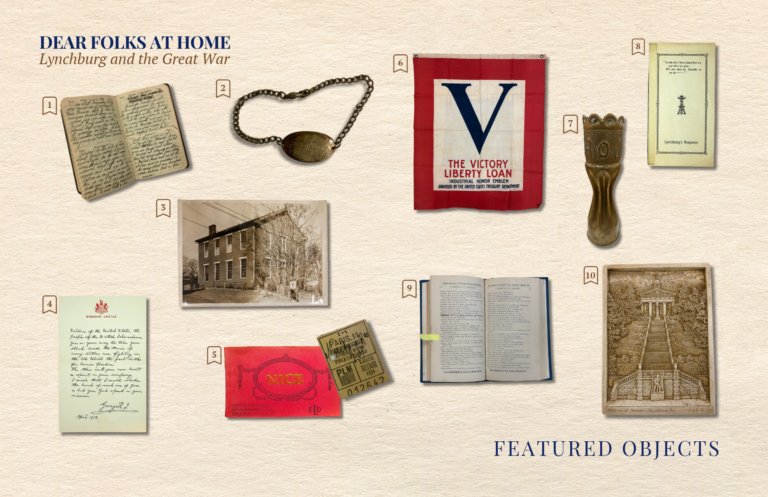
The Great War in six items
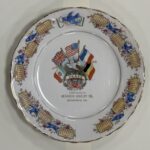
“Peace” plate, November 11, 1918, issued by Altavista Jewelry Co., Altavista, VA – on loan from Gerard & Carolyn Sherayko
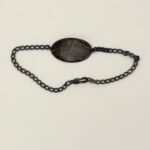
Identification bracelet, ‘Guy A. Dirom 1lt 318th Inf.’ The Jones Manuscript #1534: Guy Alexander Dirom Papers
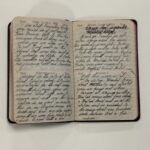
War Diary, Guy A. Dirom personal diary, The Jones Manuscript #1534: Guy Alexander Dirom Papers
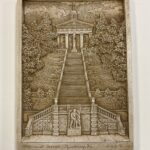
Commemorative Plaque, “Monument Terrace – Lynchburg, Va.” Copyright 1941 by F.G. DePew, The Jones collection
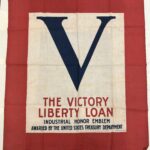
Victory Loan Banner, The Jones, Manuscript #1103: American Red Cross Canteen Service Papers
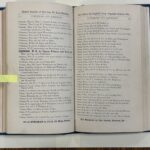
Lynchburg City Directory, 1880, page 115 with business listing for Campbell Jones (father of T. E. Jones)
5. Coming Home
The armistice of November 11, 1918 ended the fighting, but not the war’s toll on Lynchburg. Families across the city grieved sons, husbands, and brothers who did not return. These were “Gold Star” families, so called for the gold star that replaced the blue star in a home’s service flag when a loved one was killed. Even as the guns fell silent in Europe, a second crisis was already reaching Lynchburg. The 1918-1919 influenza pandemic, which killed more Americans than the war itself, struck the city and its returning soldiers hard. Influenza outlasted the war. Local health office figures showed 200 deaths from flu and pneumonia in October 1918 alone, and new cases were still being reported in late January 1919.
WW1 veterans marched the city’s streets on Memorial Day 1919, joining Boy Scouts, school children, and civic and women’s organizations in a parade to the old Methodist cemetery. There, a service honored the soldiers who have their lives in the war. Memorial stars were placed for the fallen and Taps sounded. For a city welcoming its soldiers home, the day was a chance to remember the dead together.
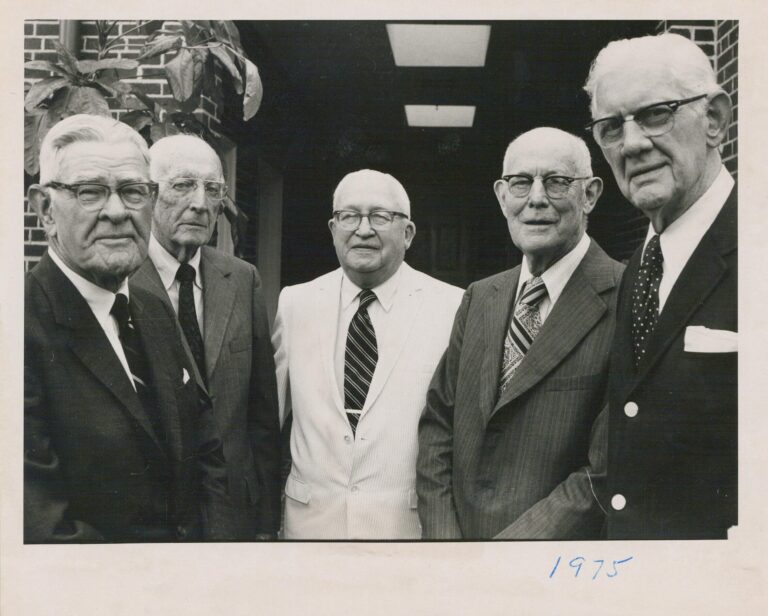
In the years after the armistice, some veterans founds their own way to honor a friend who didn’t come home. Lynchburg’s Musketeers made a pact in France, after losing their friend Frank Clemmer of Staunton, Va. on the front. They formed a “Last Man’s Club” with members pledging to keep gathering year after year until only one remained. By 1975, when Guy Dirom and his fellow Musketeers met for their reunion, the club’s purpose was the same as it had been in 1919: to remember the war fallen.
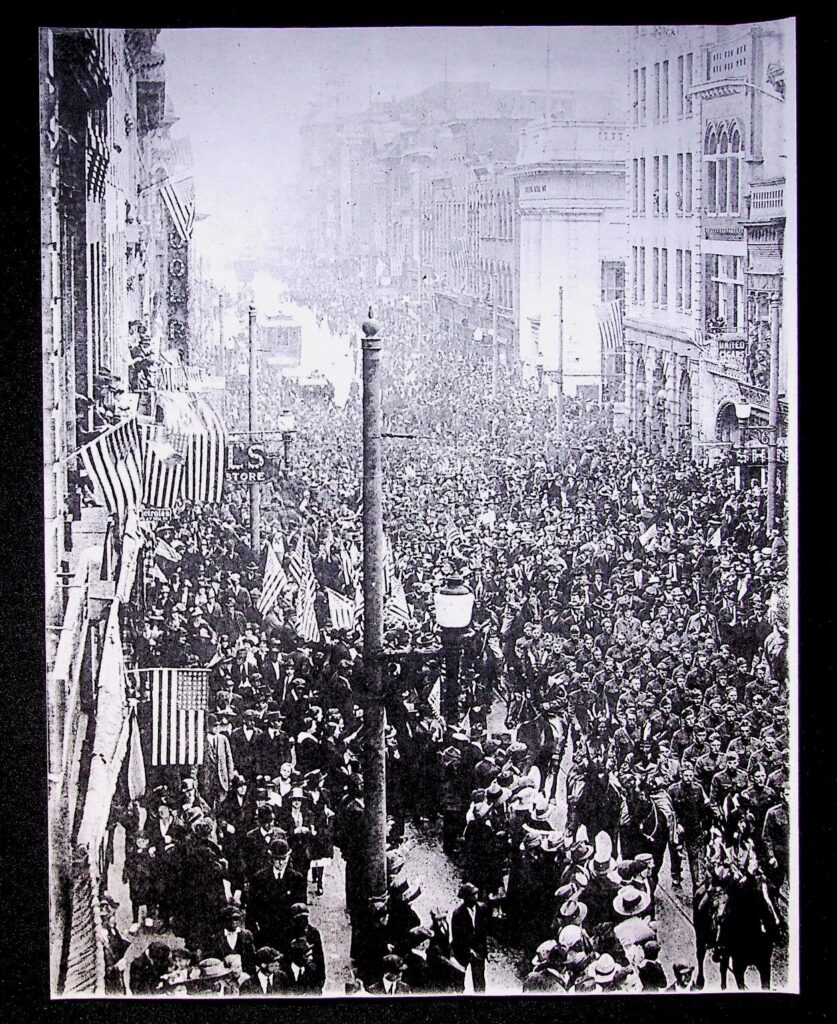
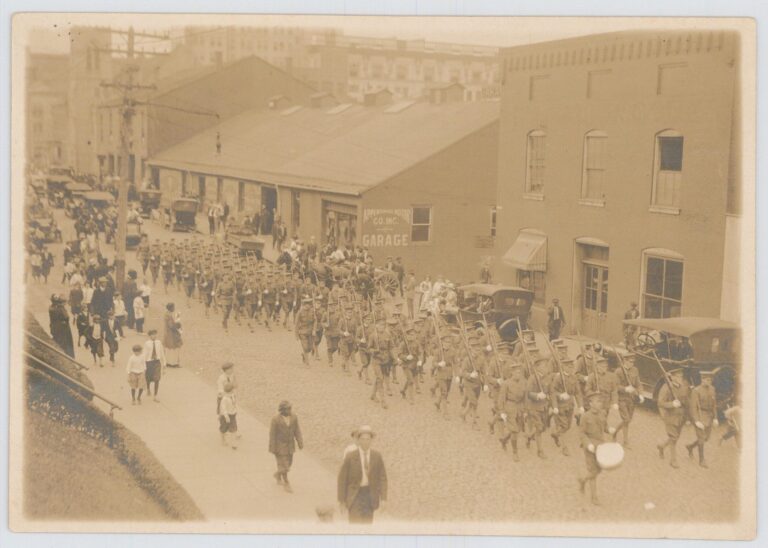
Victory Parade on Main Street, 1918. The Jones, PIC PCELPar4.00001
Lynchburg soldiers marching down Ninth Street during the Memorial Day observance, May 1919. The Jones, PIC PCel Celebration, Box 2
Guy Dirom (center, in white) with fellow Musketeers at their 1975 reunion. The Jones MS1173, Musketeer Minute Book.
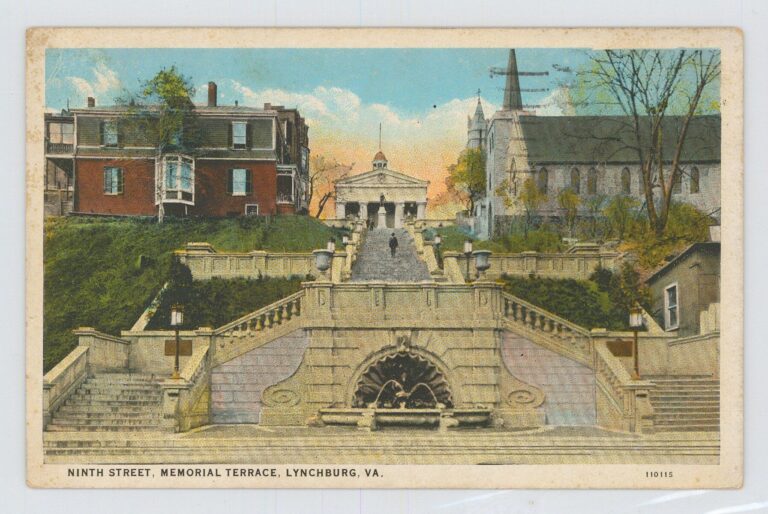
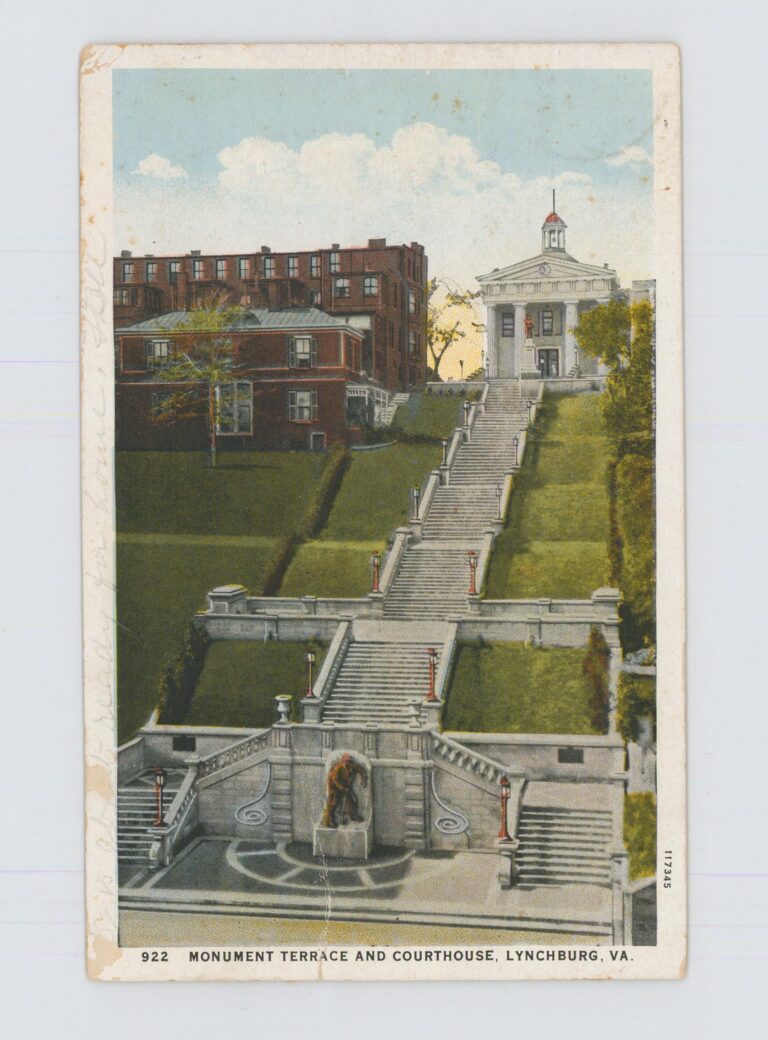
This colorized postcard captures the stairway just after its 1920s transformation — newly rebuilt in stone, with a dolphin fountain still marking its base before the Doughboy took that place. The fountain is now near the Community Market. The Jones, PMon Monuments, Box 5.
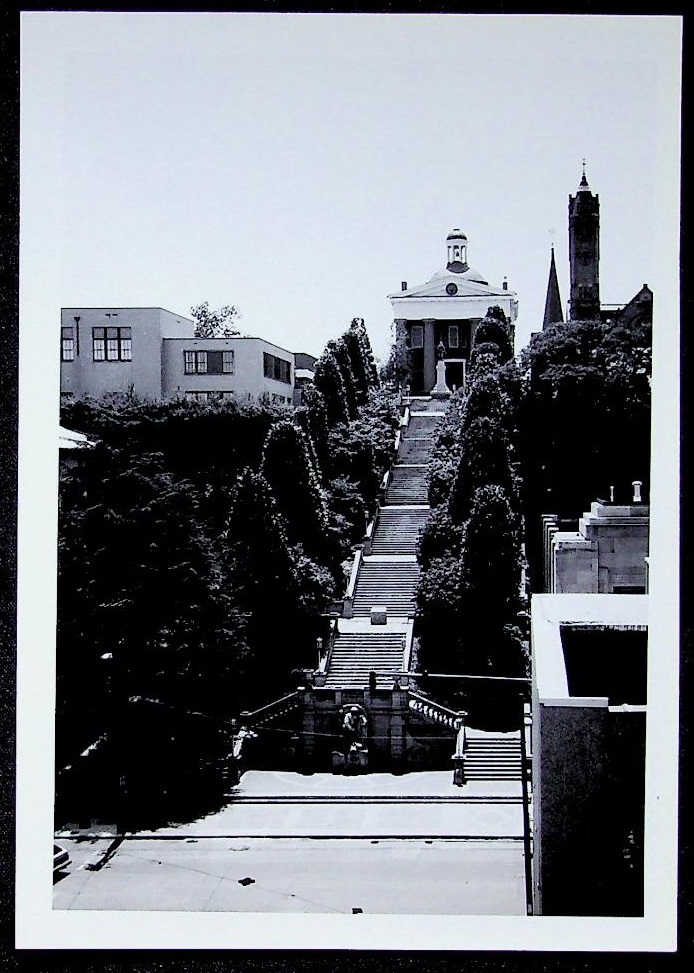
Lynchburg’s most visible memorial to its soldiers grew out of a modest stairway built to solve an everyday problem — how to get up and down Court House Hill. What began as a simple connection between two downtown streets became, through the Great War, the city’s enduring tribute to those who never came home.
First laid out in the early 1880s by city engineer August Forsberg, the stairway connecting Church and Court Streets was completely reimagined four decades later. City manager Edward Beck championed the idea, and architect Aubrey Chesterman’s 1924–1925 redesign transformed the old steps into a formal memorial to the 43 Lynchburg soldiers, sailors, and marines who died in the war. Sculptor Charles Keck’s bronze statue The Listening Post — known locally as “the Doughboy” — was unveiled and dedicated on Veterans Day, November 11, 1926, exactly eight years after the armistice, with the names of the city’s heroes etched in the stone wall behind it.
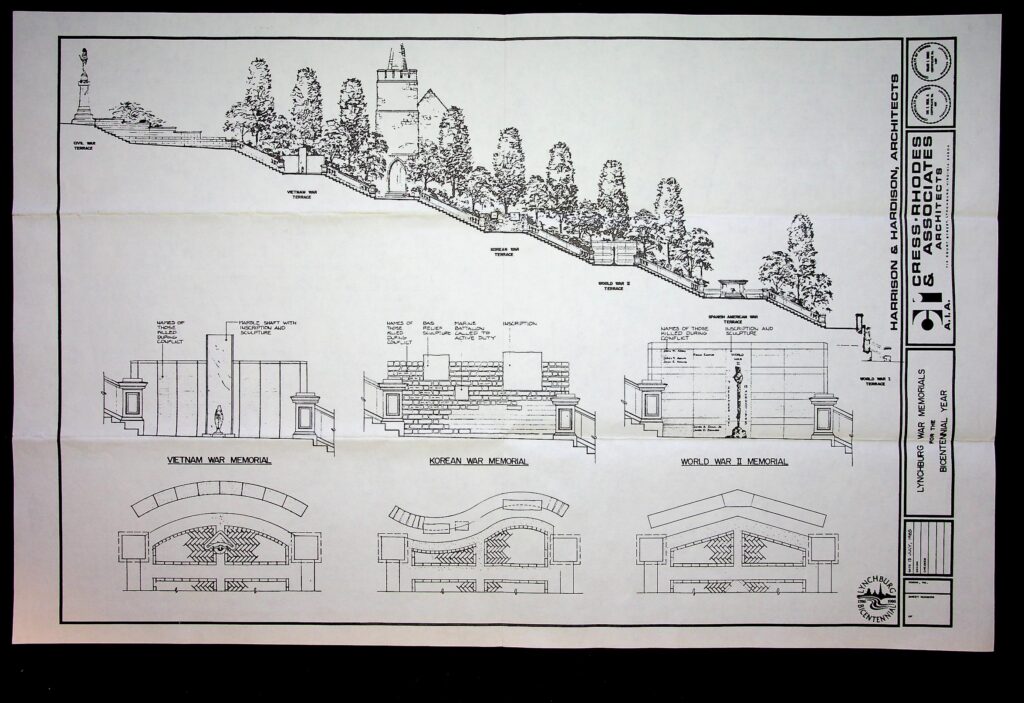
Monument Terrace remains the heart of downtown Lynchburg today. The monument was later expanded with memorials to soldiers who made the ultimate sacrifice in World War II, Korea, Vietnam, and the wars that followed. Restoration work over the years has repaired the stone stairway and stabilized Keck’s statue, ensuring the Doughboy continues to stand watch over Church Street. Each Veterans Day and Memorial Day, Lynchburg still gathers here. The monument serves the same civic purpose the terrace was built for a century ago.
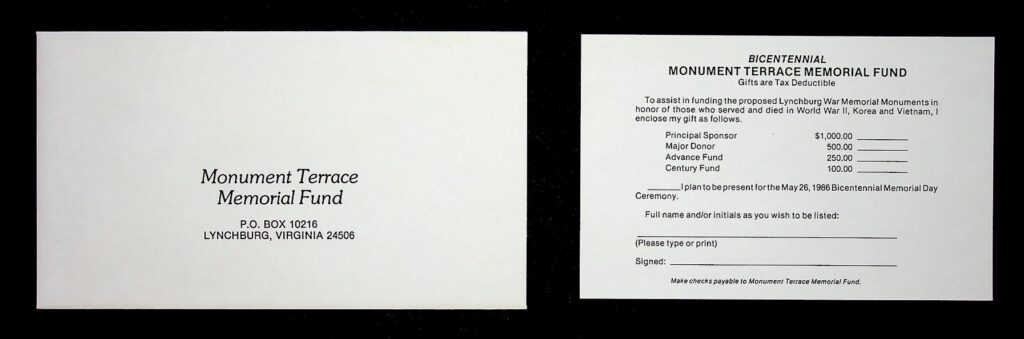
Below: 1955 landscape and elevation plans Monument Terrace by Stanhope Johnson, The Jones LAA 1920; 1976 War Memorial plans, The Jones PAM3245; Bicentennial fundraiser envelope for Memorial Terrace, The Jones PAM3245
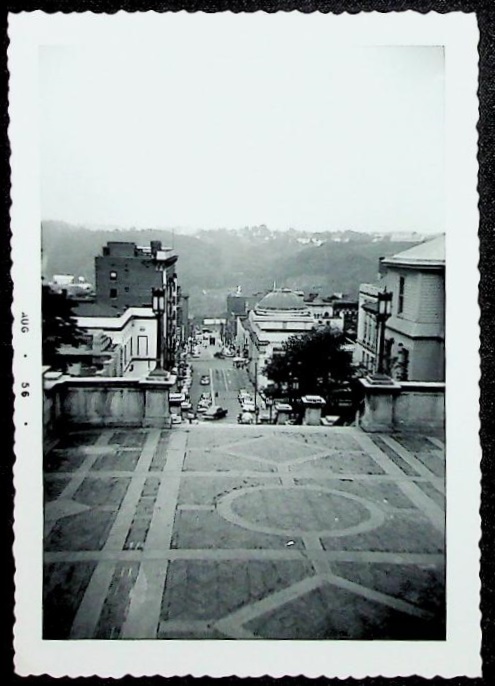
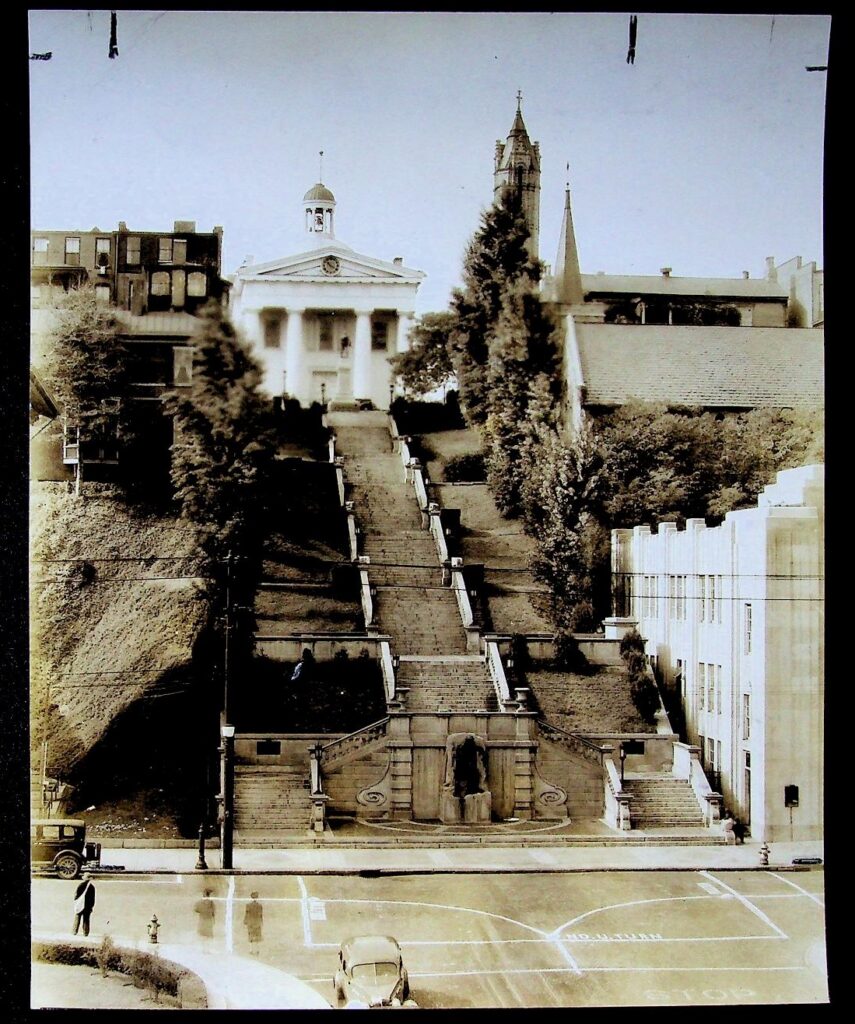
Postcard and photographic images of Monument Terrace, The Jones, PIC PMon Monuments, Box 5